

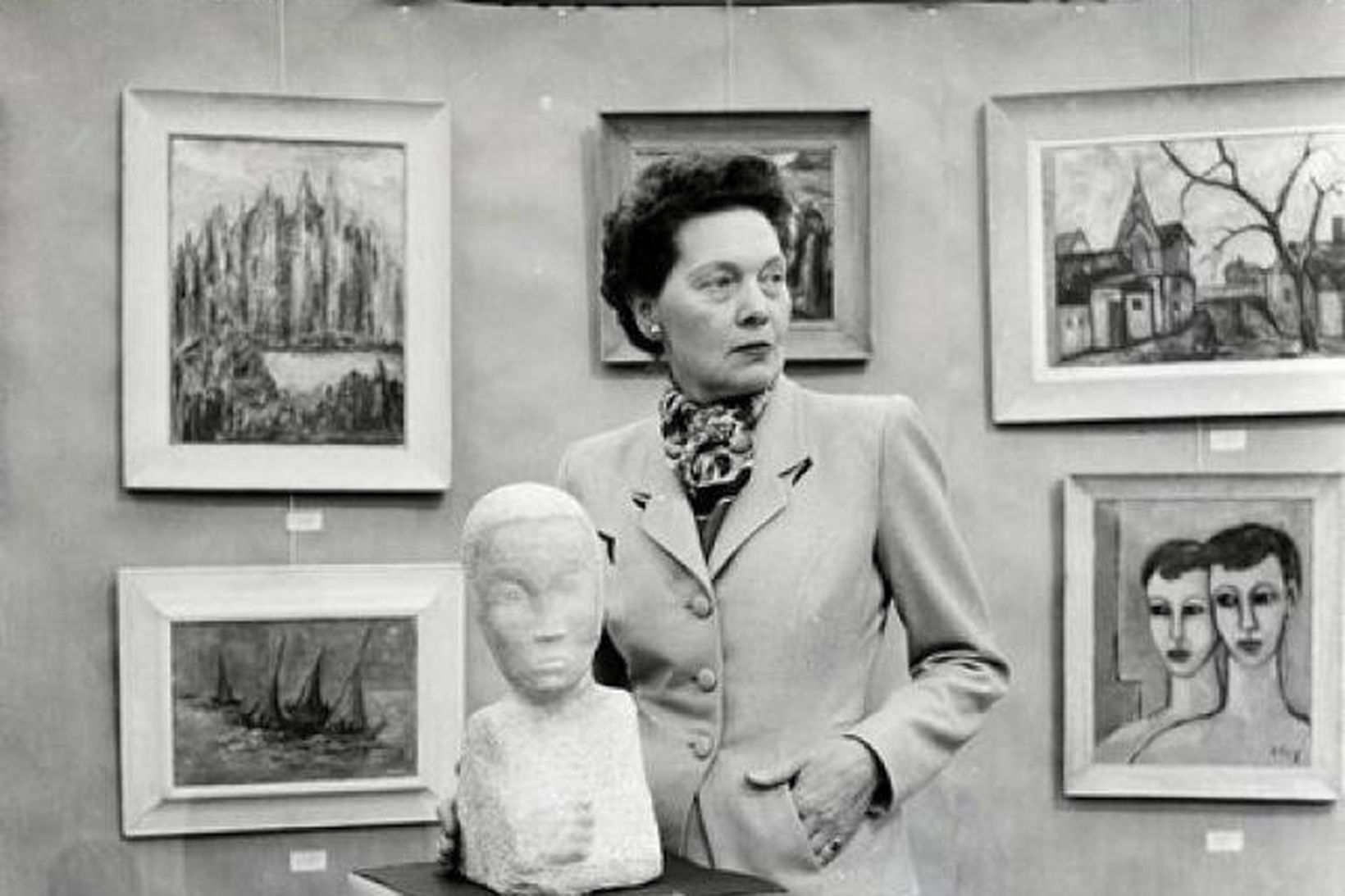
Nína Sæmundsson was a pioneer of Icelandic sculpture who achieved international recognition in the first half of the 20th century. She was also a queer woman who spent much of her adult life in a loving relationship with another woman. That part of her story has long been overshadowed by her artistic achievements. Now, a new exhibition at Reykjanes Art Museum, Nína, Our Dearest Nína, brings her personal life, relationships and LGBT+ legacy into the spotlight. The exhibition runs until 29 November.
From rural Iceland to Hollywood
Nína Sæmundsson was born Jónína Sæmundsdóttir in Fljótshlíð, southern Iceland, in 1892. She became one of the first Icelandic women to pursue sculpture as a professional career, eventually establishing herself as an internationally recognised artist.
She began studying art in Copenhagen in 1915 and later attended the Royal Danish Academy of Fine Arts.
During her student years in Copenhagen, Nína was engaged to Gunnar Thorsteinsson, the brother of Icelandic artist Muggur. Both contracted tuberculosis, a potentially fatal illness at the time. Gunnar died in 1921 at a sanatorium in Denmark while Nína was receiving treatment in Switzerland. His death was a devastating loss for her.
Nína recovered from her illness and continued her artistic studies and career. Her work took her to Rome and Paris before she moved to the United States in 1926, working first in New York and later in Hollywood.
Nína attracted attention early in her career. One of her best-known works in Iceland is Móðurást (Motherly Love), which stands in Mæðragarður, a small park near Lækjargata in central Reykjavík. The sculpture remains one of her most recognisable works in her homeland.
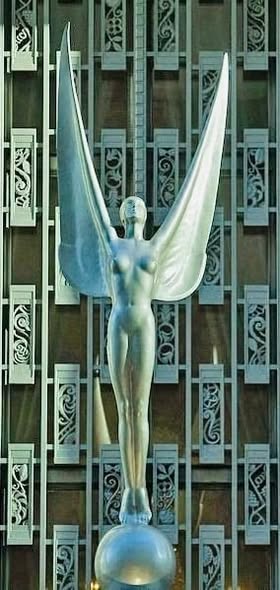
In the United States, Nína achieved considerable success. In 1931, she won a competition to create a sculpture for the newly built Waldorf Astoria hotel in New York, reportedly chosen from around 400 submissions. Her work, The Spirit of Achievement, became one of her most celebrated creations. She also produced numerous portrait sculptures, including works depicting prominent figures in American cultural life.
Nína was an independent woman who devoted herself to art at a time when female artists faced considerable obstacles. She never married or had children. But that did not mean her life was without love, intimacy or meaningful relationships.
Polly James and love in Hollywood
During her years in California, Nína shared her home and much of her life with Polly James, an American woman who worked as a screenwriter, including for Universal Studios. The two lived together in Hollywood for more than two decades, until Nína returned to Iceland in 1955.
Older accounts of Nína's life often described Polly as her friend or companion, when she was mentioned at all. Their relationship, however, went far beyond friendship.
Letters written by Polly to Nína after they were separated are preserved in the manuscript collections of the National and University Library of Iceland. They reveal the depth of feeling between the two women and offer a much more personal glimpse into Nína's life.
Art historian Hrafnhildur Schram, who published a biography of Nína in 2015, also explored their relationship, drawing on correspondence and other personal sources.
For the new exhibition, curators Viktoría Guðnadóttir and Ynda Eldborg have revisited this material. In an interview with the Icelandic newspaper Morgunblaðið in September, Ynda explained that Nína's sexuality had long been brushed aside, even though people were aware of it. Polly's love letters leave little doubt about the emotional depth of their relationship.
Viktoría also pointed out that Polly often began her letters with the words "dearest Nina". This provided the inspiration for the exhibition's title, Nína, Our Dearest Nína.
The title carries a double meaning, expressing both the affection felt for Nína as an artist and the romantic love she shared with Polly.
Polly was not the only woman to hold an important place in Nína's life. During her student years in Copenhagen, Nína met fellow artist Inge Ebstrup, with whom she maintained a close and emotionally significant relationship over many years. They travelled together and continued corresponding when they were apart. After Nína returned to Iceland, pianist Sesselja Stefánsdóttir was also among the women closest to her.
The surviving records do not tell us everything about these relationships, and it would be misleading to describe all of them definitively as romantic. What they do show is that close relationships with women were central to Nína's life.
It may be difficult to apply modern labels to her sexuality without knowing how Nína herself would have described her identity. But there is equally little reason to disguise a documented love between women as mere friendship.
The Mermaid and her return to Iceland
When Nína returned to Iceland in 1955, she had already enjoyed a long and successful international career. Yet the reception she received in her homeland was not always welcoming.
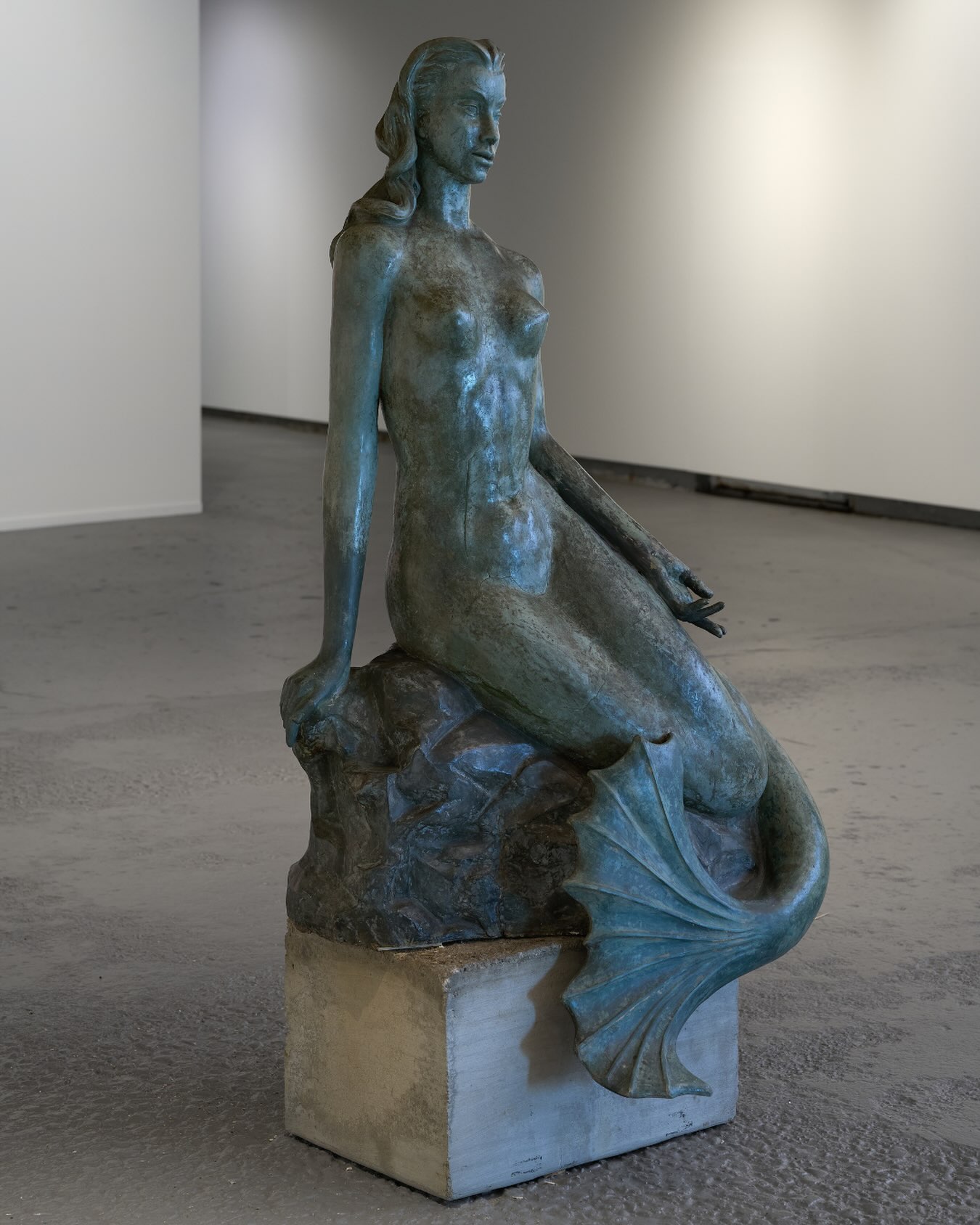
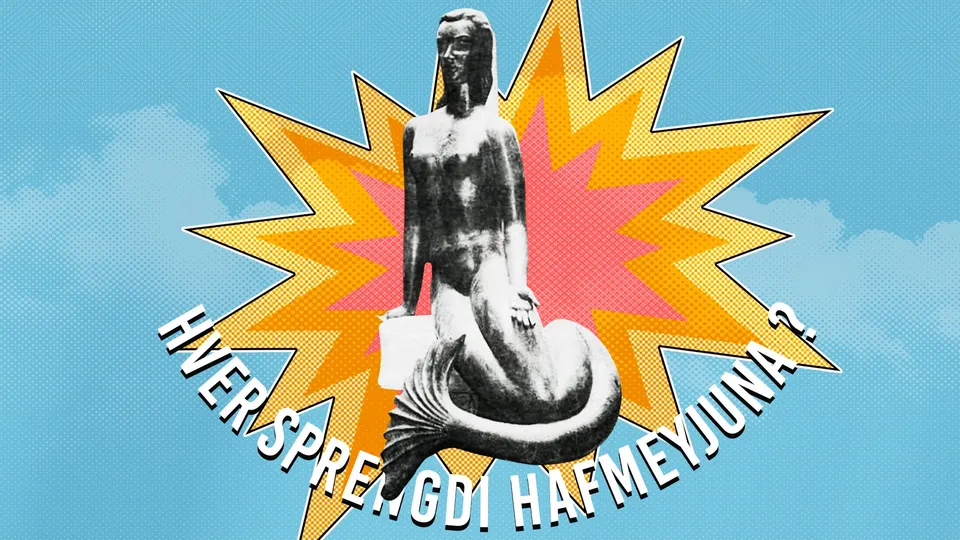
One of the most striking examples is Hafmeyjan (The Mermaid), a sculpture installed in Reykjavík's city pond, Tjörnin, in 1959. The work provoked considerable controversy. On the night of New Year's Eve, leading into 1960, it was destroyed by an explosion. No one was ever held responsible.
More than six decades later, the motives behind the attack remain uncertain. Was it hostility towards the artwork itself, a conflict between competing artistic movements, or could prejudice against Nína as a woman and queer artist also have played a part?
These questions are explored in Hver sprengdi hafmeyjuna? (Who Blew Up the Mermaid?), a six-part radio documentary produced by Iceland's national broadcaster RÚV. Presenter Halla Harðardóttir investigates the history of the sculpture, the society to which Nína returned and the various theories surrounding its destruction.
Fragments of the original Mermaid are among the objects displayed in the exhibition at Reykjanes Art Museum. They serve as a powerful reminder that Nína's story is not simply one of artistic success, but also of a woman whose independence and choices did not always fit the expectations of Icelandic society.
Queer Nína and the Reykjavík of the past
How did being both a woman and queer affect Nína's standing in Icelandic society? And why did she struggle to gain the same recognition at home that she had enjoyed abroad?
These questions are central to the fifth episode of RÚV's documentary series Who Blew Up the Mermaid?, broadcast on 10 October 2026.
The episode, titled Hinsegin Nína og Reykjavík sem var (Queer Nína and the Reykjavík That Was), examines Nína's place in Icelandic cultural life and the social attitudes she encountered after returning from decades abroad.
Halla Harðardóttir speaks with Gróa Björk Hjörleifsdóttir, Ásta Kristín Benediktsdóttir and Margrét Elísabet Ólafsdóttir about LGBT+ history, Reykjavík in earlier decades and the social expectations surrounding gender and sexuality.
The documentary adds an important dimension to Nína's story. It asks whether prejudice against women and LGBT+ people may have influenced the way she and her work were received.
That does not establish that the destruction of the Mermaid was a hate crime. The identity and motives of those responsible remain unknown. Nevertheless, Nína's experiences cannot be fully understood without considering the society in which she lived.
Listen to the RÚV documentary Hinsegin Nína og Reykjavík sem var (40 minutes, in Icelandic).
Nína through the eyes of a new generation
The exhibition Nína, Our Dearest Nína opened at Reykjanes Art Museum during the annual Ljósanótt cultural festival in September. Rather than presenting a conventional retrospective, it brings Nína's work into dialogue with contemporary LGBT+ artists.
Five artists were invited to create new works in response to her art: Diljá Þorvaldsdóttir, Jo Pawlowska, Olga Bergmann, Sabine A. Fischer and Victoria Ahrens.
Their contributions explore themes including intimacy, care, chosen families, identity, childhood, nature and transformation. Together, they offer fresh ways of looking at both Nína's art and the life she lived.
Diljá Þorvaldsdóttir, for example, explores the idea of chosen family in Öryggisnet (Safety Net), a sculpture inspired by Nína's Unga móðir (Young Mother). The work reflects the importance of finding support, protection and belonging among people we choose to have in our lives, something that can be particularly meaningful within LGBT+ communities.
Jo Pawlowska responds to Nína's painting Drengur (Boy) with a work titled Óskabein (Wishbone). Personal photographs documenting Jo's gender-affirming journey become part of a dialogue with the work of an artist who lived through a very different period of history.
Olga Bergmann, meanwhile, explores the notion of finding one's own group or chosen community through a collection of wooden sculptures. Sabine A. Fischer draws on personal experiences of gender expectations and identity, while Victoria Ahrens takes inspiration from Nína's Mermaid and the mythology surrounding the figure.
Curators Viktoría Guðnadóttir and Ynda Eldborg have emphasised that Nína's queer identity should not be treated as an incidental detail, separate from the rest of her story. It was part of who she was, the relationships she formed and the circumstances in which she created her work.
In an interview with RÚV about the exhibition, the curators discuss how queer perspectives can offer new interpretations of Nína's art, particularly the Mermaid.
Unlike Copenhagen's famous Little Mermaid, Nína's figure is not a passive creature resting on a rock. Instead, she appears powerful, independent and unafraid to face the world. The curators see this as particularly meaningful when viewed through the experiences of LGBT+ people.
This does not mean that every work Nína created should be explained through her sexuality. Her artistic achievements are substantial in their own right. But acknowledging her personal relationships and identity gives us a fuller and more human understanding of the artist.
Her story also shows how easily LGBT+ lives can disappear from historical narratives, even when those individuals were famous and their work remains on public display.
Sometimes, all it takes is for a decades-long romantic relationship to be described as friendship, and an essential part of someone's life quietly disappears from the record.
Through Nína, Our Dearest Nína, the artist is being rediscovered not only as a pioneer of Icelandic sculpture, but also as a woman who loved, lived and created on her own terms.
Exhibition open until 29 November
Nína, Our Dearest Nína is on display at Reykjanes Art Museum, located in Duus Museum Houses, Duusgata 2–8, Reykjanesbær, Iceland, until 29 November 2026.
The museum is open Tuesday to Sunday, from 12:00 to 17:00.
Further information is available on the official exhibition website, which also includes an English description.

